


 English

Flexibele koperen rail
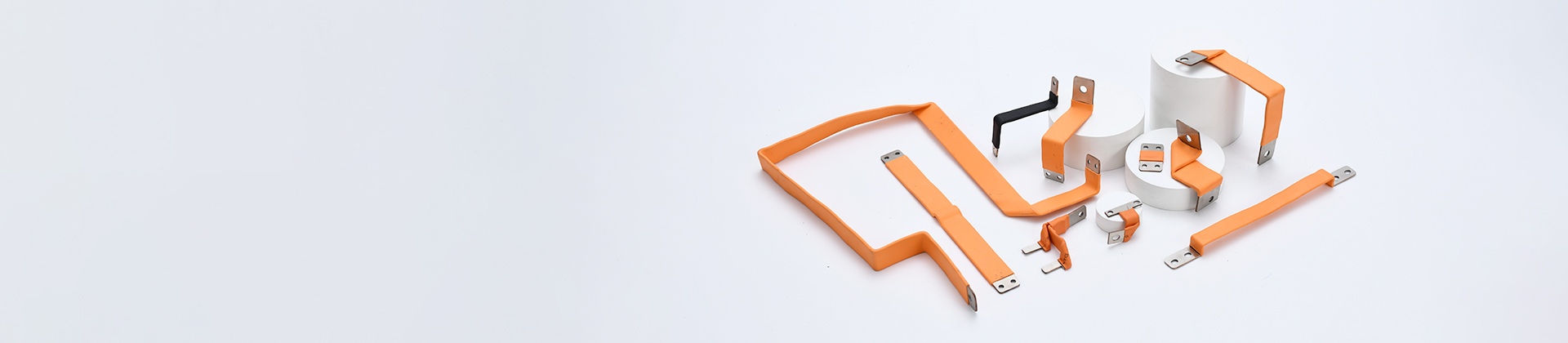
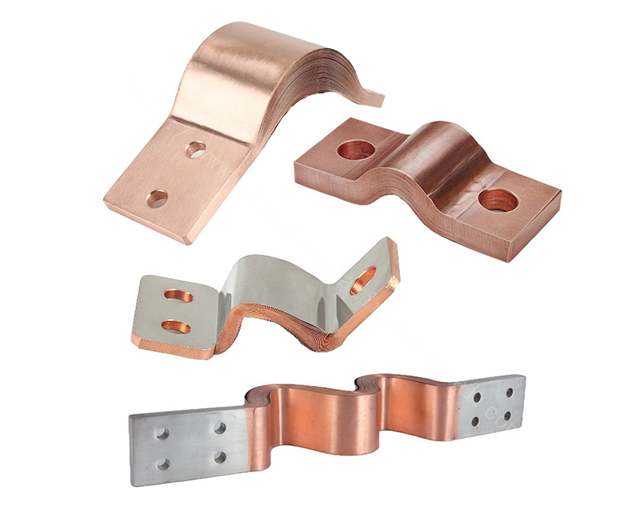
Gelamineerde koperen stroomrails zijn geavanceerde elektrische geleiders die zijn ontworpen voor hoogwaardige stroomdistributie in compacte en flexibele systemen. Deze componenten, ook wel bekend als gelamineerde flexibele stroomrails of gelamineerde koperen stroomrails, zijn opgebouwd uit meerdere dunne koperlagen (0,1 mm–0,5 mm dik) die met elkaar zijn verbonden door middel van hoogwaardige isolatiematerialen. Deze unieke gelaagde constructie combineert de uitstekende elektrische geleidbaarheid van koper (≈58 mS/m bij 20 °C) met een uitzonderlijke mechanische flexibiliteit, waardoor buigradii tot wel 10 keer de dikte van de stroomrail mogelijk zijn zonder beschadiging.
Gelamineerde stroomrails worden veel gebruikt in toepassingen waar ruimte, gewicht en efficiëntie cruciaal zijn, zoals elektrische voertuigen, systemen voor hernieuwbare energie, datacenters, de lucht- en ruimtevaart en industriële stroomdistributie.
Een koperen stroomrail is een essentieel elektrisch onderdeel dat elektrische energie efficiënt over circuits verdeelt. In vergelijking met traditionele ronde geleiders bieden koperen gelamineerde stroomrails de volgende voordelen:
ondersteunen hogere stroomcapaciteiten (100A–5000A) met stroomdichtheden tot 10A/mm².
Zorg voor een lage spanningsval en minimale weerstandsverliezen.
Verbeter de mechanische flexibiliteit voor krappe ruimtes en dynamische toepassingen.
Bieden een gewichtsbesparing tot wel 70% ten opzichte van stijve stroomrails.
Biedt verbeterd thermisch beheer met een temperatuurstijging van minder dan 50 °C tijdens normaal gebruik.
Deze eigenschappen maken flexibele, gelamineerde stroomrails de voorkeurskeuze voor moderne elektrische systemen die compacte, krachtige en lichtgewicht oplossingen vereisen.
Het lamineerproces van de stroomrail omvat verschillende nauwkeurige fabricagestappen:
Koperfolielaminering: dunne koperfolies worden op elkaar gestapeld en onder hitte en druk gelamineerd om meerlaagse platen te vormen.
Isolatieverbinding: lagen worden gescheiden door isolatiemateriaal om elektrische isolatie te garanderen en kortsluiting te voorkomen.
Snijden en vormen: gelamineerde platen worden gesneden en gevormd tot stroomrails met behulp van buig- en vormtechnieken die geoptimaliseerd zijn voor flexibiliteit.
Oppervlaktebehandeling: randen en aansluitingen worden vaak vertind of verzilverd om de corrosiebestendigheid en soldeerbaarheid te verbeteren.
Testen en kwaliteitscontrole: elke stroomrail ondergaat geleidbaarheidstests, isolatieweerstandstests, buigduurtests en thermische prestatiebeoordelingen.
Dit strenge proces garandeert hoogwaardige koperen stroomrails die geschikt zijn voor industriële, automobiel- en ruimtevaarttoepassingen.
Flexibele, gelamineerde stroomrails hebben diverse toepassingen:
elektrische voertuigen (EV) en hybride systemen: sluit batterijmodules aan met een ultralage contactweerstand (<10 μΩ), reducing heat and losses.
renewable energy systems: used in solar inverters and dc connections up to 1000v, reducing emi by 20–30 db.
industrial power distribution: switchgear and motor control centers requiring short-circuit ratings up to 100ka.
aerospace & defense: lightweight and shock-resistant busbars for avionics and defense systems.
data centers: high-current 48v dc busways for minimal voltage drop and high efficiency.
electrical conductivity: ≥98% iacs, resistivity 1.724 μΩ·cm at 20°c.
current capacity: 2–3× more than equivalent round conductors.
mechanical flexibility: over 100,000 flex cycles at minimum bending radius with <5% resistance increase.
voltage rating: typically 600v–1000v systems, insulation resistance >1000 mΩ.
thermal performance: heat dissipation up to 1.5 w/cm², maintaining safe operating temperatures.
corrosion resistance: tin or silver plating on contact areas.
emi reduction: laminated layers reduce electromagnetic interference in sensitive applications.
weight reduction: up to 70% lighter than rigid copper busbars of equivalent capacity.
g and n fortune limited is a leading copper laminated busbar manufacturer, offering:
tailored solutions: custom sizes, layer counts, and insulation materials.
advanced manufacturing: precision lamination and forming for consistent quality.
comprehensive testing: electrical, mechanical, and thermal performance guaranteed.
global compliance: ul, ce, rohs, mil-std certified products.
industry expertise: supplying ev, renewable energy, aerospace, data center, and industrial sectors.
technical support: dedicated engineering assistance for design optimization and troubleshooting.
q1: what are laminated busbars?
a1: laminated busbars are multi-layered copper conductors separated by insulating materials, designed for flexible, compact, and high-current applications.
q2: Wat is het doel van een koperen stroomrail?
a2: to efficiently distribute electrical power across circuits while minimizing losses, improving thermal management, and reducing system weight.
q3: what is the best material for a busbar?
a3: high-conductivity copper (≥98% iacs) is preferred due to its low resistivity, excellent thermal performance, and mechanical strength.
q4: how flexible are laminated busbars?
a4: they can endure over 100,000 flex cycles at a minimum bending radius of 10× thickness without significant resistance increase.
q5: what current capacities can laminated flexible busbars handle?
a5: from 100a up to 5000a, with current densities reaching 10a/mm², outperforming equivalent round conductors.
q6: are these busbars suitable for ev battery packs?
a6: yes, they are widely used in electric vehicles and hybrid systems for low-resistance battery interconnections.
q7: what materials and coatings are used?
a7: copper layers laminated with insulating materials; terminals are tin or silver plated for corrosion resistance.

Copyright © 2026 G AND N FORTUNE LIMITED Allee rechten voorbehouden.