


 English

Blog
2026-03-20 13:27:02
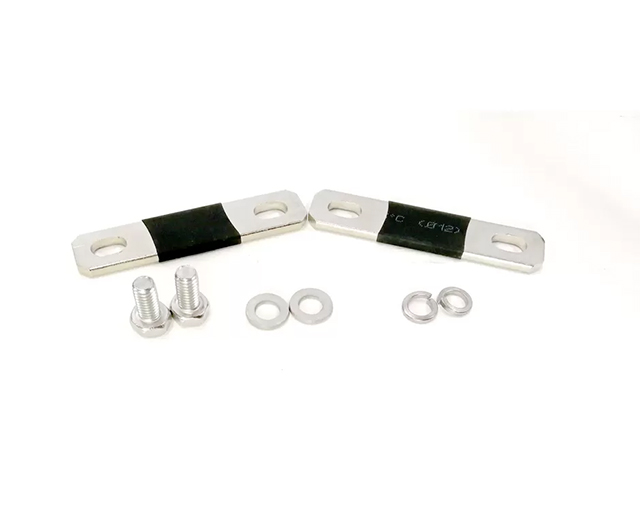
Batterijbusbar-aansluitingen zijn essentiële componenten in elektrische stroomdistributiesystemen. Ze fungeren als geleidende verbindingen tussen meerdere batterijcellen of batterijbanken. Deze gespecialiseerde connectoren zijn ontworpen om hoge stroombelastingen aan te kunnen met behoud van een lage weerstand en optimale thermische prestaties. Ze worden doorgaans gemaakt van... koper (99,9% zuiver) of aluminiumlegeringen (6061-t6)Stroomrails bieden een betrouwbaardere en efficiëntere verbinding in vergelijking met traditionele bedradingsoplossingen, met name bij toepassingen met hoog vermogen.
Hoogwaardige accubusbars vertonen een uitzonderlijke elektrische geleidbaarheid. Koperen busbars bereiken doorgaans een hoge elektrische geleidbaarheid. 100% IACS (International Annealed Copper Standard) geleidbaarheid, met een soortelijke weerstand van 1,724 μΩ·cm bij 20°CAluminiumalternatieven bieden een iets lagere geleidbaarheid bij 61% iacsmaar met een aanzienlijke gewichtsbesparing.
De huidige capaciteit van stroomrails hangt af van hun dwarsdoorsnede en materiaal. 10 mm × 3 mm koperen stroomrail kan veilig vervoeren 150-200a continu, met een kortetermijnpiekcapaciteit tot 300a gedurende 30 secondenDe juiste dimensionering is cruciaal om oververhitting te voorkomen, waarbij de temperatuurstijging doorgaans beperkt blijft tot... 30°C boven de omgevingstemperatuur onder volledige belasting.
Stroomrails moeten de warmte die wordt gegenereerd door effectief afvoeren. i²r verliezenDe thermische geleidbaarheid van koper 401 w/(m·k) presteert beter dan aluminium 237 w/(m·k)Maar beide materialen vereisen voldoende afstand en ventilatie in de behuizing. Geavanceerde ontwerpen kunnen hierin geïntegreerd worden. thermische beeldvormingsmarkeringen voor eenvoudige monitoring.
De mechanische sterkte van de stroomrail is essentieel voor trillingsbestendigheid. Koperen stroomrails hebben doorgaans een treksterkte van 200-250 MPaTerwijl aluminiumlegeringen variëren van 110-310 MPa afhankelijk van het temperament. De juiste aanhaalmomenten voor verbindingen variëren van 5-25 nm afhankelijk van de boutgrootte en het materiaal.
Oppervlaktebehandelingen verhogen de duurzaamheid aanzienlijk. Veelvoorkomende opties zijn onder andere: vertinning (5-10 μm dikte), verzilvering (3-8 μm), of anodisatie voor aluminium. Deze behandelingen zorgen ervoor dat de contactweerstand onder de limiet blijft. 50 μΩ zelfs daarna Meer dan 1000 thermische cycli.
Moderne accupakketten voor elektrische voertuigen maken gebruik van busbars om honderden lithium-ioncellen met elkaar te verbinden. De accumodule van de Tesla Model S gebruikt bijvoorbeeld busbars. 0,8 mm dikke, 25 mm brede koperen stroomrails met laser-gelaste verbindingen die bestand zijn tegen piekstromen van 1000 Ade lage weerstand (<0.1mΩ per connection) is critical for maximizing range.
grid-scale battery installations rely on bus bars for their scalability and reliability. a 1mwh containerized ess might use 50mm × 10mm aluminum bus bars to interconnect battery racks, reducing voltage drop to <0.5% across the entire system while withstanding 6000+ charge/discharge cycles.
uninterruptible power supplies for data centers employ bus bars rated for 500-5000a continuous operation. these often feature modular designs with ip65-rated insulation and may include integrated hall-effect current sensors for real-time monitoring.
solar-plus-storage installations use bus bars to combine power from multiple sources. specialized designs accommodate 1500vdc systems with creepage distances exceeding 25mm to prevent arcing in humid conditions.
weight-sensitive applications favor aluminum bus bars with 63% weight reduction versus copper. aerospace-grade versions meet mil-dtl-38999 specifications for vibration resistance, surviving 10-2000hz random vibration profiles at 0.04g²/hz.
implement a quarterly inspection protocol checking for:
visual signs of oxidation (green patina on copper, white powder on aluminum)
thermal discoloration indicating hot spots (use infrared thermography at 30-100μm spectral range)
torque verification using calibrated tools (re-torque to ±10% of spec after first 100 hours)
for contaminated connections:
de-energize the system completely
use non-abrasive fiber brushes (0.1mm bristles) with isopropyl alcohol (99.9% purity)
apply no-ox-id a-special or equivalent antioxidant compound (0.1mm coating thickness)
perform annual micro-ohm measurements:
use a 4-wire kelvin measurement at 10a test current
compare to baseline readings - replace if resistance increases by >20%
document results with ambient temperature compensation (0.4%/°c for copper)
ensure proper cooling:
maintain ≥10mm air gaps between parallel bus bars
clean ventilation paths to limit temperature rise to <40°c above ambient
for forced air systems, verify 2-5 m/s airflow velocity across surfaces
in harsh environments:
apply conformal coating (50-100μm) to non-contact surfaces
for marine use, specify cuni90/10 alloy bus bars with >5000 hours salt spray resistance
install humidity indicators (30-60% rh range) in enclosures
note: always follow manufacturer-specific maintenance guidelines, as proprietary designs may have unique requirements. for example, some lithium-ion battery systems specify torque-to-yield fastener procedures that shouldn't be re-torqued.

Copyright © 2026 G AND N FORTUNE LIMITED Allee rechten voorbehouden.